Challenges, solutions and compliance
Odour control is a critical part of waste and landfill operations, where decomposing materials, wet waste and shifting weather conditions can quickly generate strong emissions. If these odours move beyond the site boundary, they can create operational pressure, attract regulatory scrutiny and affect nearby communities.
This article explains the primary causes of odour in the waste sector and outlines practical strategies that facilities can use to maintain compliance and manage emissions effectively.
Managing odour in waste and landfill sites
Waste and landfill sites face constant pressure to manage odour effectively, as organic decomposition and waste-handling activities can quickly lead to strong, lingering emissions. Consistent odour management is essential for meeting regulatory requirements and maintaining positive relationships with nearby communities.
By identifying the sources of odour and applying targeted, reliable control methods, facilities can minimise complaints, support worker safety and create a more compliant operating environment. Professional odour management solutions provide sites with the tools they need to control emissions proactively and maintain smooth operations.
Why odour control is critical for waste facilities
Odour control is essential for waste facilities because poor management can quickly lead to community complaints and increased attention from regulators. When odours drift beyond a site boundary, nearby residents often contact councils or environmental authorities such as the EPA, prompting investigations and potential enforcement action.
According to EPA Victoria's odour management guidance, uncontrolled emissions can be treated as a nuisance and may trigger compliance requirements if they affect local amenity. These issues can disrupt operations, damage community trust and place pressure on facilities to respond urgently.
Effective odour neutralising technologies help waste operators stay compliant, maintain positive relationships with local councils and protect their reputation while continuing to deliver essential services.
Common causes of odour in waste management
Decomposing waste in solid waste management facilities generates a range of volatile compounds that contribute to strong, persistent odours. The main causes include:
- Volatile organic compounds (VOCs): Released as organic materials break down, creating a mix of gases that produce sharp or pungent smells.
- Hydrogen sulphide (H₂S): Formed during anaerobic decomposition, recognised by its strong "rotten egg" odour.
- Moisture and heat: These conditions accelerate biological activity, increasing the production of VOCs and sulphides.
- Disturbance of waste: Turning, compacting or transporting waste can release trapped gases into the air.
- Leachate and wet waste areas: Liquids accumulating in pits, ponds or compacted layers can trigger faster decomposition, producing more pungent odours that escape as the waste breaks down.
1. Fluctuating waste volumes
Waste facilities often deal with highly variable waste intake, and these fluctuations can lead to unpredictable odour spikes. When large loads arrive in a short period, the sudden increase in organic material can accelerate decomposition and trigger stronger emissions. Wet or anaerobic waste is particularly prone to producing intense odours as it breaks down. These peaks can be difficult to manage without systems designed to respond to changing volumes, making it essential for facilities to use solutions that can adapt to the size, type and timing of incoming waste.
2. Weather and environmental impacts
Weather plays a major role in how odours behave around waste facilities. High temperatures speed up decomposition, increasing the intensity of smells released from organic waste. Rainfall adds moisture, which can trigger faster breakdown and bring stronger odours to the surface. Wind conditions also influence how far odours travel, carrying them beyond site boundaries and into surrounding communities. Because temperature, wind and rain vary throughout the year, facilities need odour control systems that provide consistent performance across changing environmental conditions.
3. Biological and chemical reactions
As waste decomposes, it generates a mix of biological and chemical compounds that contribute to strong odour emissions. Organic acids form as materials break down, creating sharp, sour smells. At the same time, sulphides and mercaptans are produced during anaerobic activity, releasing the distinct rotten-egg and sulphur-based odours commonly associated with waste sites. Because these compounds are volatile and easily released into the air, facilities need odour control strategies that target both biological activity and the chemical reactions responsible for persistent smells.
4. Community complaints and reputation risk
Odour events can quickly lead to complaints from nearby residents, putting pressure on waste operators and drawing attention from local councils. When odours move beyond site boundaries, they can affect everyday activities in surrounding neighbourhoods, prompting concerns about air quality and site practices. Repeated complaints not only create operational challenges but also pose a risk to a facility's reputation, especially in areas experiencing growth and residential development. Effective odour complaints management helps operators maintain community trust, demonstrate regulatory responsibility and minimise the impact of unexpected odour incidents.
Understanding odour regulations and compliance
Waste facilities must meet EPA odour control guidelines to ensure operations do not negatively impact surrounding communities. These regulations outline clear expectations for preventing nuisance odours, monitoring emissions, and responding to complaints.
Compliance requires facilities to use proven odour control methods, demonstrate regular system maintenance, and document how risks are being managed on-site. By following EPA guidance, operators can reduce regulatory pressure, maintain a safe working environment and show a proactive commitment to environmental compliance.
EPA and local council expectations
Local councils play a key role in enforcing odour standards through Environmental Protection Policies, working alongside EPA Victoria to ensure waste facilities meet their obligations. Councils respond to community concerns, assess odour risks and check that operators are using appropriate controls to prevent nuisance emissions.
Facilities that do not follow EPA odour control guidelines may face investigations or improvement notices, making it essential for operators to understand local expectations and maintain reliable odour management practices.
Proven solutions for effective odour control
Cleanawater provides a range of odour control systems designed to suit the varied conditions found across waste and landfill sites. These solutions include surface treatments, misting systems and large-scale vapour units, each chosen to address specific odour sources and site layouts.
By tailoring technology to the volume of waste, environmental factors and operational demands, Cleanawater helps facilities maintain reliable odour reduction, support EPA compliance and minimise the impact of emissions on surrounding communities.
Surface treatments: Bektra 830 and Bektra 830F
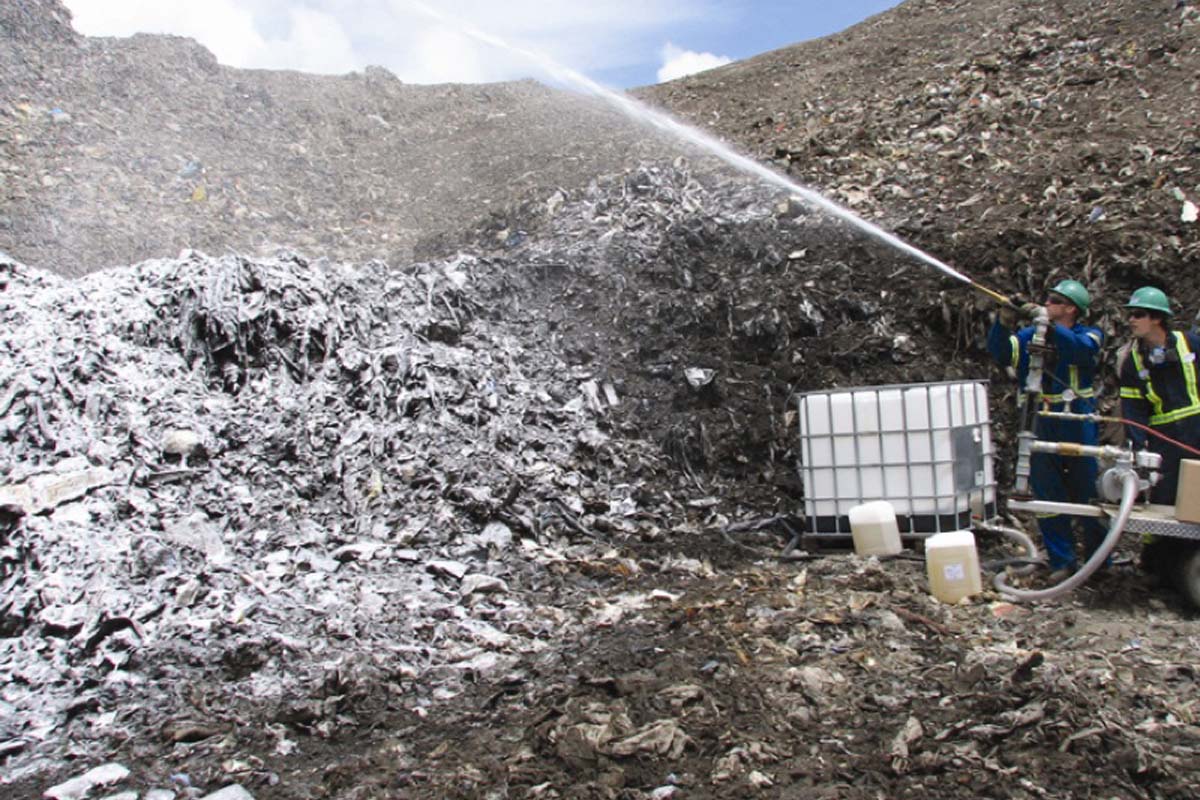
Bektra 830 and Bektra 830F provide reliable surface odour control by neutralising emissions at the point where waste begins to break down. Bektra 830 is a topical foaming spray designed to penetrate soils, grease and organic deposits, delivering fast odour reduction while supporting the breakdown of odour-producing compounds.
Bektra 830F is a foaming odour-neutraliser concentrate formulated for large or heavily soiled areas, using detergents and bio-stimulants to disrupt the mechanisms that generate VOCs, sulphides and other odorous compounds. Both products are part of Cleanawater's surface treatment solutions and can be used to manage surface-level emissions safely, efficiently and with minimal disruption to waste facility operations.
Misting systems: Portable odour suppression
Cleanawater's misting systems provide portable odour suppression by dispersing neutralising agents through a fine spray. These systems are designed to bond with odour particles as they travel through the air, reducing the strength of emissions around active waste handling areas.
Because misting units are mobile, operators can position them where odours are most likely to occur, such as transfer points, sorting lines or temporary stockpiles. Cleanawater's misting systems offer a practical way to manage odours across changing site conditions, helping facilities improve air quality without interrupting day-to-day operations.

Vapour systems: Continuous large-scale control
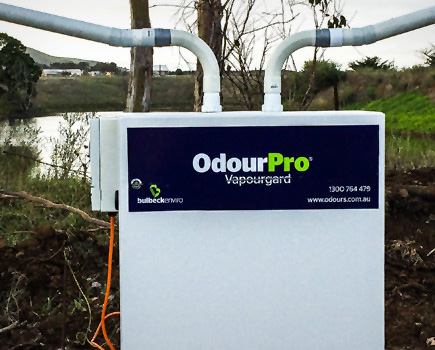
Cleanawater's vapour systems provide continuous large-scale odour control by releasing a fine, airborne vapour that chemically neutralises odour molecules. Solutions such as VapourGard and OdourPro are designed to remain suspended in the air, allowing the neutralising vapour to follow the same pathways as odours and treat emissions as they move across a site or beyond its boundary.
This makes vapour systems well-suited to landfills, transfer stations and other large waste facilities where odours can disperse widely. Cleanawater's vapour systems offer reliable, 24/7 coverage to help operators minimise off-site impacts and maintain stronger compliance and community confidence.
Case studies: Real results from Cleanawater clients
Cleanawater's odour control systems have been successfully implemented across major waste facilities, including the Blaxland Waste Management Facility and the Lucas Heights Resource Recovery Park.
At Blaxland, vapour systems were installed to help manage odours in a community-sensitive area, reducing off-site impacts and supporting council operations.
At Lucas Heights, the only general and putrescible waste landfill in Sydney, Cleanawater's vapour solutions were applied across a site handling close to a million tonnes of waste each year. These projects demonstrate how targeted, large-scale systems can deliver measurable results in challenging environments.
Maintenance and monitoring best practice
Regular servicing is essential to maintain odour control performance and meet EPA expectations. Effective monitoring helps operators detect issues early and ensure systems continue to operate as intended. The following best-practice steps support reliable, long-term odour management:
Checklist for odour monitoring and maintenance
- Inspect odour control equipment routinely to ensure no blockages, leaks or damage that could reduce system effectiveness.
- Check and replace filters as required to maintain optimal air flow and treatment performance.
- Review vapour and misting formulations to confirm the correct dosage and ensure the neutralising agent is suited to current waste conditions.
- Monitor weather-related impacts such as heat, wind and rainfall, which may require adjusting system runtime or output.
- Record odour monitoring results to track trends, demonstrate compliance and support EPA reporting.
- Schedule regular professional servicing to verify calibration, inspect system components and maintain consistent odour control.
- Follow EPA guidance on odour management and monitoring to ensure regulatory compliance. More details are available at the EPA NSW odour management page.
Partnering with Cleanawater for compliant odour control
Cleanawater supports waste industry operators with end-to-end odour management solutions designed to meet regulatory expectations and maintain reliable site performance. From identifying odour sources to choosing the most effective treatment systems, our team provides practical guidance based on real-world industry experience.
We help facilities implement compliant, long-term odour control strategies that reduce community impact, support EPA requirements, and keep operations running smoothly. By partnering with Cleanawater, operators gain access to proven odour management services across Australia, backed by ongoing technical support and industry expertise.
Speak to an odour management specialist
Effective odour control starts with understanding the unique conditions of your site. Cleanawater offers consultation services to help operators identify emission sources, assess compliance requirements and choose the right systems for reliable long-term control. To find a tailored approach for your facility, speak with our odour management specialists today.
Must Read
What to Expect During a Modular Wash Bay Installation
CleanaWater, we make the process of installing a modular wash bay on your site as smooth and straightforward as possible. ...
Read moreThe CleanaWater Team Driving Water Treatment and Sustainability
CleanaWater is powered by a dedicated team of professionals who bring expertise and passion to every project. ...
Read more